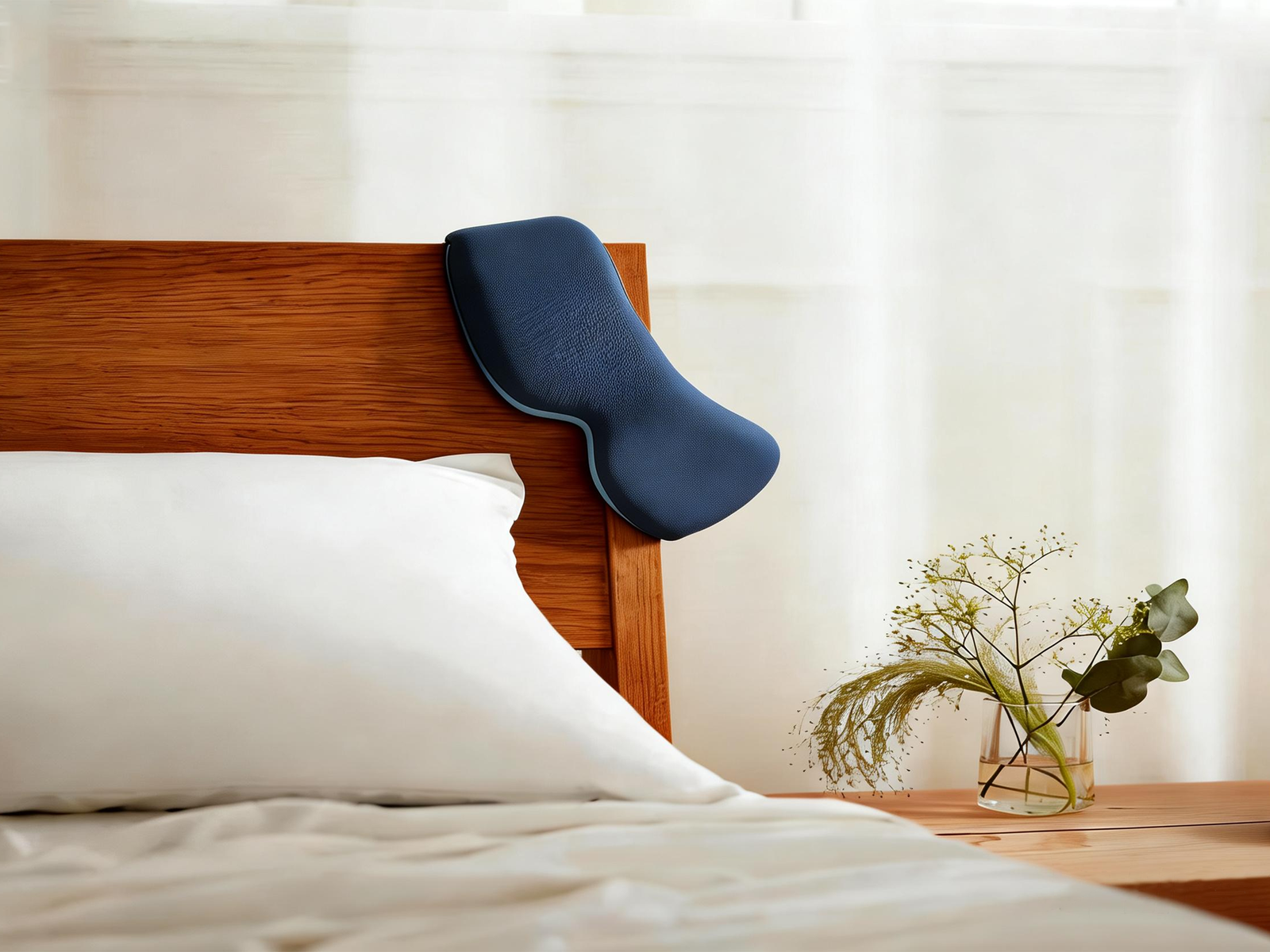
If you’ve ever felt exhausted but couldn’t fall asleep—or found yourself waking up in the middle of the night for no clear reason—the issue might not be your sleep itself.
It might be your environment. More specifically, light.
Most people underestimate one simple fact:
your brain is constantly aware of light—even when your eyes are closed.
A faint streetlight through the window, a small LED indicator, or even the glow from your phone can quietly interfere with your sleep without you realizing it.
Why Even a Small Amount of Light Affects Your Sleep
Sleep isn’t just about “turning off the lights and drifting away.”
It’s a biological process controlled by your body’s internal clock.
When it gets dark, your body produces melatonin—the hormone that signals it’s time to sleep.
But here’s the problem:
melatonin is extremely sensitive to light.
Even low levels of light exposure can:
- Delay your ability to fall asleep
- Reduce sleep depth
- Increase the chances of waking up at night
- Leave you feeling more tired the next day
What seems like “harmless light” can actually disrupt your entire sleep cycle.
Why You Feel Tired Even After 7–8 Hours of Sleep
Many people think they’re getting enough sleep simply because of the hours.
But sleep quality matters more than sleep duration.
When your environment isn’t fully dark, your brain struggles to enter deep sleep stages—the phase where real recovery happens.
So even if you “sleep” for 8 hours, your body may not fully recharge.
That’s why you might wake up feeling:
- Groggy
- Mentally foggy
- Low on energy
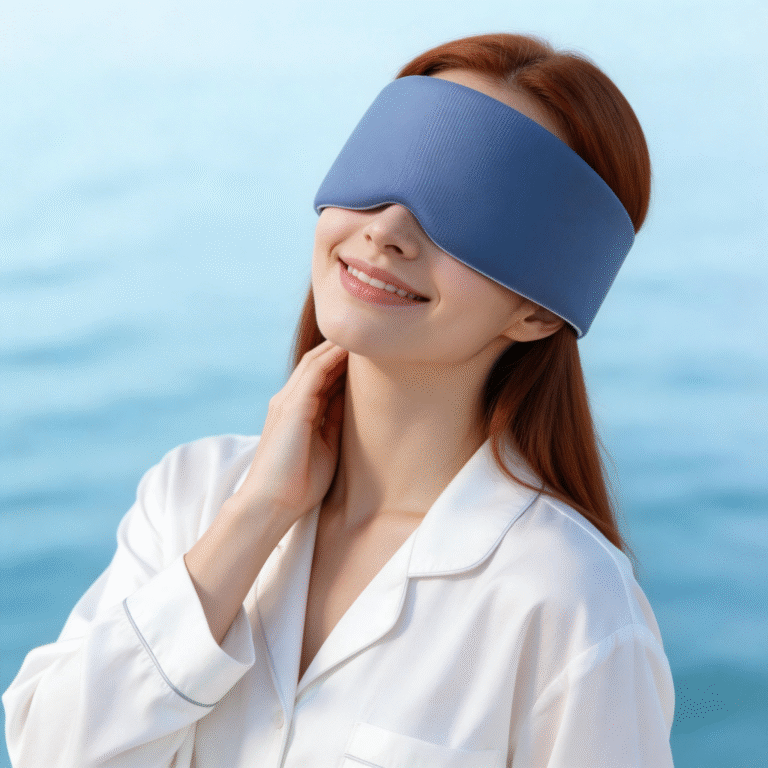
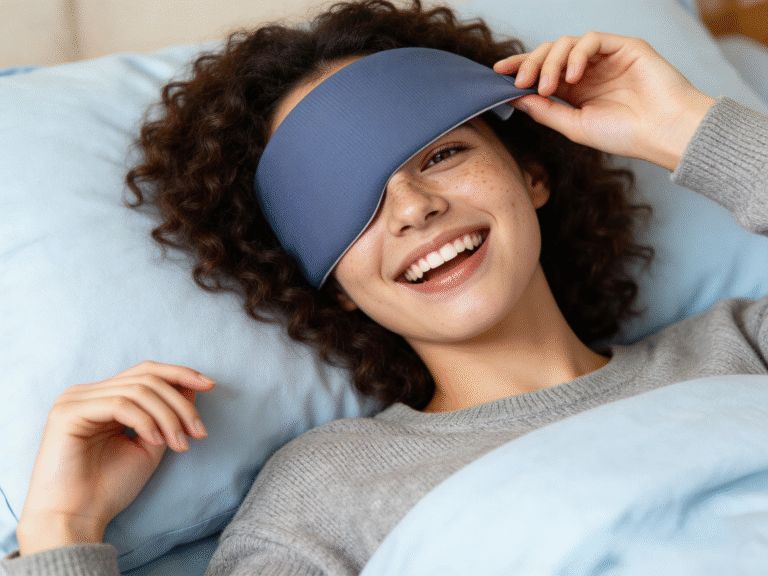
What an Eye Mask Actually Does (It’s More Than Just Blocking Light)
A good eye mask isn’t just a simple accessory—it acts like a signal to your brain.
✔ Creates a stable dark environment
It removes all external light cues, helping your body shift into sleep mode faster.
✔ Helps you fall asleep more easily
With less light interference, melatonin production becomes more consistent.
✔ Improves sleep continuity
Fewer disruptions mean fewer wake-ups during the night.
✔ Provides a sense of mental “disconnection”
Wearing an eye mask creates a subtle feeling of separation from the outside world, helping your mind relax.What Makes a Good Eye Mask?
Not all eye masks are effective. The wrong one can be uncomfortable—and you’ll probably stop using it.
A high-quality eye mask should have:
- Complete light blocking (no leaks)
- Comfortable fit (no pressure on the eyes)
- Soft, breathable material
- Secure fit that stays in place overnight
�� Comfort is just as important as functionality.
Who Benefits Most from Using an Eye Mask?
Eye masks are especially useful if you:
- Are a light sleeper
- Live in a bright or urban environment
- Have irregular sleep schedules
- Travel frequently or sleep in different places
For these situations, an eye mask isn’t just helpful—it can be a simple but powerful upgrade.
A Small Change That Can Make a Big Difference
When people try to improve their sleep, they often overcomplicate things.
But sometimes, one small adjustment is enough.
�� Something as simple as wearing an eye mask before bed
It won’t force you to fall asleep.
But it creates the right conditions for sleep to happen naturally.
Sleep issues aren’t always about “trying harder” to sleep.
More often, they’re about removing the things that are quietly getting in the way.
Light is one of the most overlooked factors.
And once you experience what true darkness feels like during sleep, you may notice something subtle—but powerful:
Falling asleep feels easier
Staying asleep feels more natural
Sometimes, the smallest changes lead to the biggest improvements.