
The Age-Old Question: Is 7 Hours of Sleep Enough for You?
We’ve all heard the “8-hour sleep rule” since childhood—told that anything less is a failure, and anything more is a luxury. But in a world where busy schedules, late nights, and endless to-do lists dominate our lives, 8 hours often feels unattainable. So we settle for 7 hours, then lie awake wondering: Is this enough? Will I feel tired tomorrow? Will it harm my health in the long run? The truth is, there’s no one-size-fits-all answer to how much sleep we need—but 7 hours might be exactly right for some, and not enough for others. The key isn’t to chase a magic number, but to understand your body’s unique needs, backed by authoritative research and science.
A large cohort study published in JAMA Network Open, which followed over 320,000 adults from Japan, China, Singapore, and South Korea for nearly 14 years, revealed a crucial finding: 7 hours of sleep per night is the “golden window” for the lowest risk of all-cause mortality. This study shattered the long-standing myth that 8 hours is the universal ideal, showing that both too little and too much sleep can increase health risks. But while 7 hours may be optimal for the general adult population, individual differences mean it’s not a one-size-fits-all solution—and understanding those differences is key to getting the right rest.
Authoritative Sleep Duration Guidelines by Age
The first step to determining how much sleep you need is to look at age-based recommendations, which are backed by leading health organizations like the World Health Organization (WHO), the National Sleep Foundation (NSF), and China’s National Health Commission. These guidelines are rooted in decades of research on how sleep supports growth, development, and overall health across different life stages:
1. Infants and Toddlers (0–3 Years Old)
Sleep is critical for rapid growth and brain development in early childhood. According to China’s National Health Commission, infants aged 0–3 months need 13–18 hours of sleep per day, while 4–11-month-old babies require 12–16 hours. Toddlers aged 1–2 years need 11–14 hours, as their bodies and brains are developing at a rapid pace—missing sleep at this stage can impact cognitive development and emotional regulation later in life.
2. Children and Adolescents (4–17 Years Old)
As children enter school, their sleep needs shift but remain high. Preschoolers (3–5 years old) need 10–13 hours, while primary and middle school students require 8–10 hours of sleep nightly. Adolescents (14–17 years old) are often tempted to stay up late, but their developing bodies still need 8–10 hours—research shows that insufficient sleep in teens increases the risk of poor academic performance, mood swings, and even mental health issues like anxiety and depression.
3. Adults (18–64 Years Old)
This is where the “7-hour question” becomes most relevant. Both the NSF and China’s National Health Commission recommend 7–8 hours of sleep for adults aged 18–64. The JAMA Network Open study further confirms that 7 hours is the sweet spot for adults: sleeping less than 5 hours increases all-cause mortality by 16%, while sleeping 8, 9, or 10 hours raises the risk by 9%, 18%, and 43% respectively for men—and even more for women. A 2026 study by Shanghai Jiao Tong University added nuance, finding that 7.32 hours (about 7 hours and 19 minutes) is the optimal duration for metabolic health, as it supports optimal glucose processing and reduces the risk of type 2 diabetes.
4. Older Adults (65+ Years Old)
Contrary to popular belief, older adults don’t need less sleep—they just sleep differently. The National Health Commission recommends 6–7 hours of sleep for adults over 65, while the NSF suggests 7–8 hours. Older adults often experience fragmented sleep (waking up more frequently at night) and spend less time in deep sleep, so while their total sleep duration may be slightly shorter, the quality of their sleep is even more important for maintaining cognitive function and physical health.
Why 7 Hours Works for Some, Not Others: Individual Differences
While age-based guidelines provide a foundation, individual differences play a huge role in determining your ideal sleep duration. Here’s why 7 hours might be enough for you—or why you might need more (or even a little less):
Genetic Factors
Some people are “short sleepers”—born with a genetic predisposition to need only 6 hours or less of sleep per night without feeling tired. Others are “long sleepers,” requiring 9 hours or more to function at their best. These genetic differences are rare (affecting about 1–3% of the population), but they prove that the “7–8 hour” range is a guideline, not a mandate.
Activity Level and Lifestyle
People with high physical activity levels—like athletes or manual laborers—need more sleep (7–9 hours) to repair muscle tissue and replenish energy. Similarly, those with high-stress jobs or busy lifestyles may require extra sleep to cope with mental and emotional fatigue. On the other hand, people with sedentary lifestyles may find that 7 hours is sufficient, as their bodies don’t need as much time to recover.
Health Status
Chronic illnesses (like diabetes, heart disease, or autoimmune disorders) can increase sleep needs, as the body uses sleep to repair and fight illness. Pregnant women also need more sleep (7–9 hours) to support fetal development and their own physical health. Conversely, people with certain sleep disorders (like insomnia or sleep apnea) may sleep longer but still feel tired, as their sleep quality is poor.
How to Tell If Your Sleep Duration Is Right for You
The best way to determine if 7 hours (or any duration) is enough for you isn’t to count hours—it’s to pay attention to how you feel. According to China’s National Health Commission and央视 News, good sleep quality is defined by three key indicators: falling asleep within 30 minutes (20 minutes for children under 6), waking up no more than 3 times per night (and falling back asleep within 20 minutes), and feeling energized, focused, and in a good mood when you wake up.
Ask yourself these questions to gauge if your sleep duration is sufficient:
- Do you wake up without an alarm (or feel ready to get up when your alarm goes off)?
- Do you feel alert and focused for the first 1–2 hours after waking up, without needing a cup of coffee to function?
- Do you avoid midday slumps (or feel only mild tiredness that fades with a short walk or snack)?
- Do you feel emotionally stable—no sudden irritability, anxiety, or mood swings?
If you answered “yes” to most of these, your current sleep duration is likely right for you—even if it’s a little less or more than 7 hours. If you answered “no,” you may need to adjust your sleep time by 30–60 minutes (either more or less) and see how you feel.
Common Myths About Sleep Duration
Let’s debunk some of the most common misconceptions that confuse us about how much sleep we need:
Myth 1: “8 Hours of Sleep Is Non-Negotiable”
As the JAMA Network Open and Shanghai Jiao Tong University studies show, 8 hours is not the universal ideal. For most adults, 7 hours is optimal, and forcing yourself to sleep 8 hours when your body doesn’t need it can lead to fragmented sleep and even increase health risks.
Myth 2: “You Can ‘Catch Up’ on Sleep on Weekends”
A 2026 study from the China Sleep Research Association found that weekend补觉 can help slightly, but only if you don’t overdo it—sleeping more than 1 hour extra on weekends disrupts your circadian rhythm, leading to a “Monday blues” cycle of tiredness and poor sleep quality. Consistent sleep times (even on weekends) are far more important than “catching up” on lost hours.
Myth 3: “Sleeping More Is Always Better”
Too much sleep (more than 9 hours for adults) is linked to higher risks of heart disease, diabetes, and even death, according to the JAMA Network Open study. This is because excessive sleep can disrupt metabolic function, increase inflammation, and even signal underlying health issues like depression or sleep apnea.
How to Adjust Your Sleep Duration for Optimal Health
If you’ve realized your current sleep duration isn’t working for you, here are simple, science-backed steps to adjust it—without overhauling your entire routine:
- Start small: Adjust your bedtime or wake-up time by 15–30 minutes every 2–3 days, rather than making a 1-hour change overnight. This gives your circadian rhythm time to adapt.
- Prioritize quality over quantity: Even if you hit your ideal duration, poor sleep quality (from light, noise, or stress) will leave you tired. Optimize your sleep environment with blackout curtains, a cool temperature (60–67°F/15–19°C), and a quiet space.
- Stick to a schedule: Go to bed and wake up at the same time every day—even on weekends—to regulate your circadian rhythm. This makes it easier to fall asleep and wake up feeling energized.
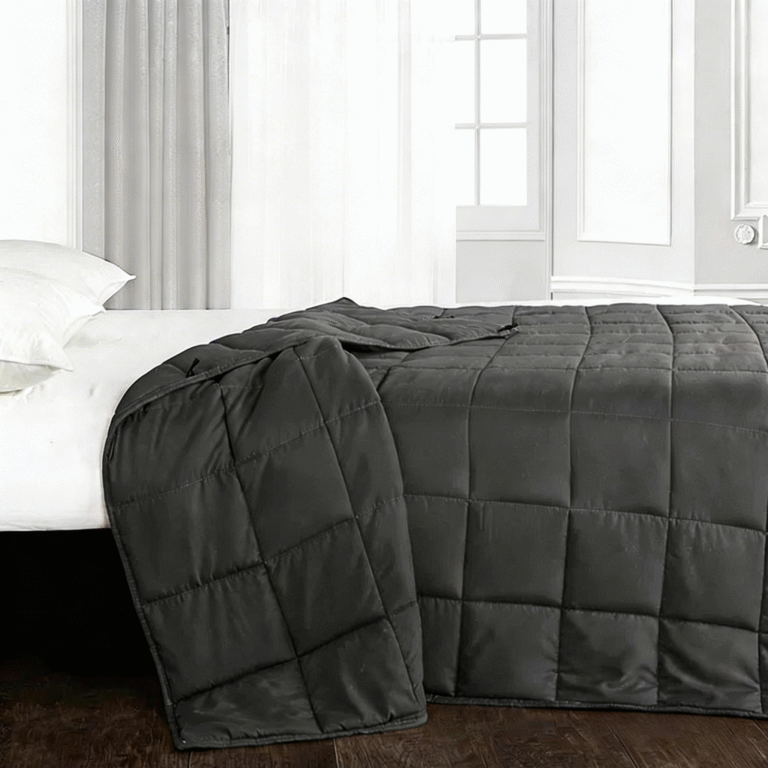
- Use gentle tools to support rest: For those struggling to get consistent, quality sleep, a herbal pillow (infused with lavender or chamomile) or a weighted blanket can help calm your nervous system, making it easier to fall into deep, restorative sleep—ensuring that the hours you do sleep are truly effective.
Supporting Your Sleep Needs with Sleep Haven
Whether you need 7 hours, 8 hours, or a little more, the key to getting the right sleep is prioritizing quality. The sleep essentials from my Sleep Haven shop—from calming herbal pillows to supportive weighted blankets—are designed to help you fall asleep faster, stay asleep longer, and wake up feeling energized, no matter your ideal sleep duration. Our products work with your body’s natural rhythm to enhance sleep quality, so every hour you spend sleeping is truly restorative.
It’s About What Works forYou
The question “Is 7 hours enough?” doesn’t have a single answer—but it does have a personal one. For many adults, 7 hours is the perfect amount of sleep, backed by authoritative research showing it supports long-term health and low mortality risk. For others, a little more or less may be needed. The goal isn’t to chase a number, but to listen to your body, prioritize consistent, quality sleep, and adjust as needed.
Sleep isn’t a one-size-fits-all equation—it’s a personal journey. By understanding your age, lifestyle, and body’s unique needs, you can find the sleep duration that leaves you feeling energized, focused, and ready to take on the day. And when you pair that with quality sleep tools, you’ll turn every night into a chance to recharge—no matter how many hours that takes.